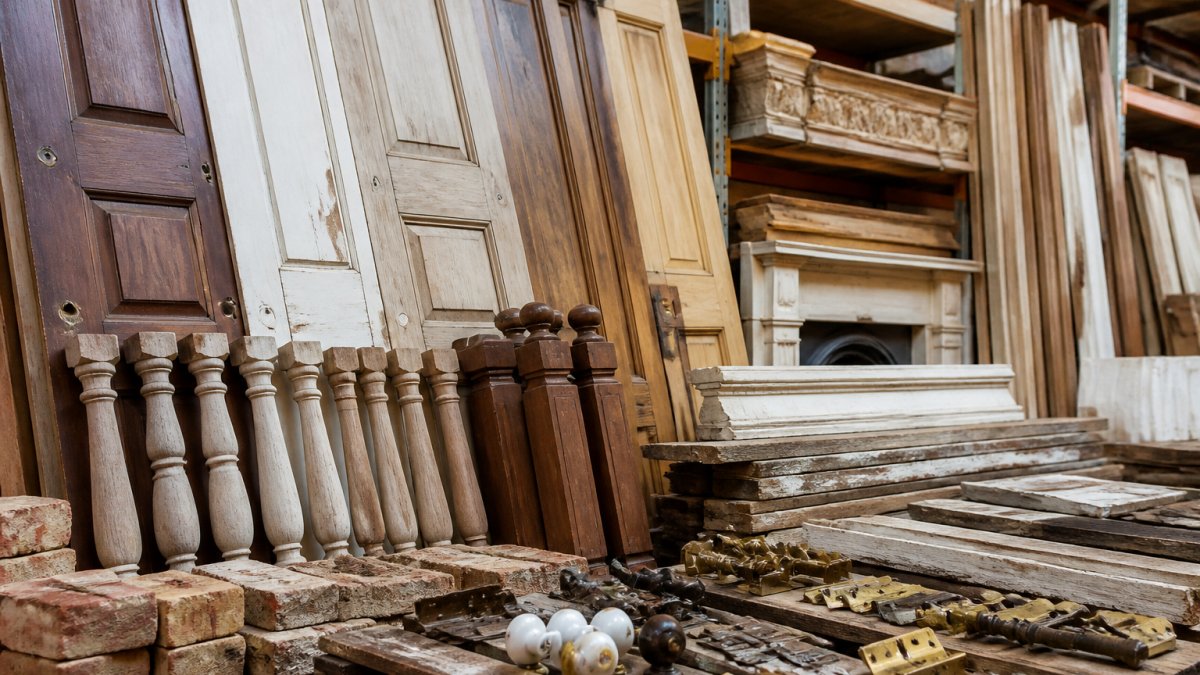
Last Updated: October 29, 2026
Quick Summary
A reliable supplier for heritage building materials proves provenance in writing, demonstrates period accuracy with documented comparisons, and confirms repeatability and rejection terms before you order. Ask for written provenance notes, moisture and borer reports, and exact fixing centres, then inspect a sample piece against your existing fabric.
- Ask for a written provenance note naming the source building, salvage date and piece description.
- Request moisture readings for reclaimed timber; roughly 18-20% or above needs drying before working.
- Confirm in writing whether the supplier can repeat the same specification in six months.
- Store reclaimed timber off the ground with spacers, covered from rain but not sealed.
- Use professional sourcing for listed properties and multi-order projects; DIY suits single cosmetic items.
Table of Contents
- What Makes a Supplier Reliable for Heritage Building Materials
- Your Heritage Restoration Checklist Before You Buy
- Sourcing Reclaimed Building Materials Without Getting Burned
- Matching Period Home Restoration Materials to Your Property
- Heritage Architectural Hardware: What to Ask Before You Order
- Professional Sourcing vs DIY: Which Route Fits Your Project
- Send Your Project Details to Restoration Station
- Frequently Asked Questions
What Makes a Supplier Reliable for Heritage Building Materials
A reliable supplier for heritage building materials is one that can prove provenance, match period detail accurately, and stand behind the order when something arrives wrong. Restoration Station has spent 35 years helping owners of heritage-listed, Colonial and Federation-style homes source period-appropriate stock. They are the ones who cannot answer a straight question about where a piece came from.
The useful part is the method, how you actually test a supplier before you commit an order. Below is a practical verification framework.
The Four Tests of a Reliable Heritage Supplier
1. Provenance you can document, not just describe. Ask where the timber, brick or ironwork originated. A serious supplier can name the source building, the salvage date, and often the manufacturer or pattern number. Vague answers about "old stock" are a warning sign.
2. Period accuracy they can demonstrate. Good suppliers know the difference between a Federation ceiling rose and a Victorian one, and they will tell you when a piece is a reproduction rather than an original.
**3. Securing a reliable source for these components often requires a deeper understanding of the historical archives involved in finding classic design patterns.
4. A returns and rejection position you understand before you order. Heritage stock is variable by nature.
Red Flags to Watch For
- No written provenance, only verbal claims
- Photographs that are clearly library or representative images rather than the actual piece
- No moisture or borer information on reclaimed timber
- Reluctance to confirm fixing centres or dimensions in writing
- No answer on repeatability for multi-stage projects
The Australian Heritage Council maintains guidance on what heritage listing actually protects, which is the natural starting point before you buy anything. Use it to confirm what your project must preserve, then hold suppliers to that standard.
Your Heritage Restoration Checklist Before You Buy
Before you contact a single supplier, work through this heritage restoration checklist. It saves money and prevents the wrong order.
- Confirm whether a heritage overlay or listing applies to your property
- Obtain the conservation management plan or council heritage citation
- Photograph and measure every existing fixture you intend to match
- Note the era and architectural style of the property
- Record patina, finish and material composition of originals
- Identify which items must be originals and which can be sympathetic reproductions
- Confirm delivery access and storage space on site
Confirm the Heritage Overlay and Conservation Requirements
Heritage controls vary by local government area, so check with your council planning department before ordering. A heritage overlay typically requires a permit for external alterations, and replacing original fabric with a non-matching product can be refused. Get the requirements in writing. It is far easier to specify the right product first than to argue about it after installation.
Document Existing Materials and Period Features
Measure everything twice and photograph it in daylight. Record the diameter of a ceiling rose, the spacing of a balustrade, the profile of a cornice. Suppliers work from dimensions, not descriptions. A photo of a door handle with a ruler alongside it will get you an accurate match; "ornate brass handle" will not.
Sourcing Reclaimed Building Materials Without Getting Burned
Reclaimed building materials carry risk that new stock does not. Timber may be riddled with borer, brick may be the wrong firing, and ironwork may have been repaired badly decades ago. The fix is inspection, not optimism.
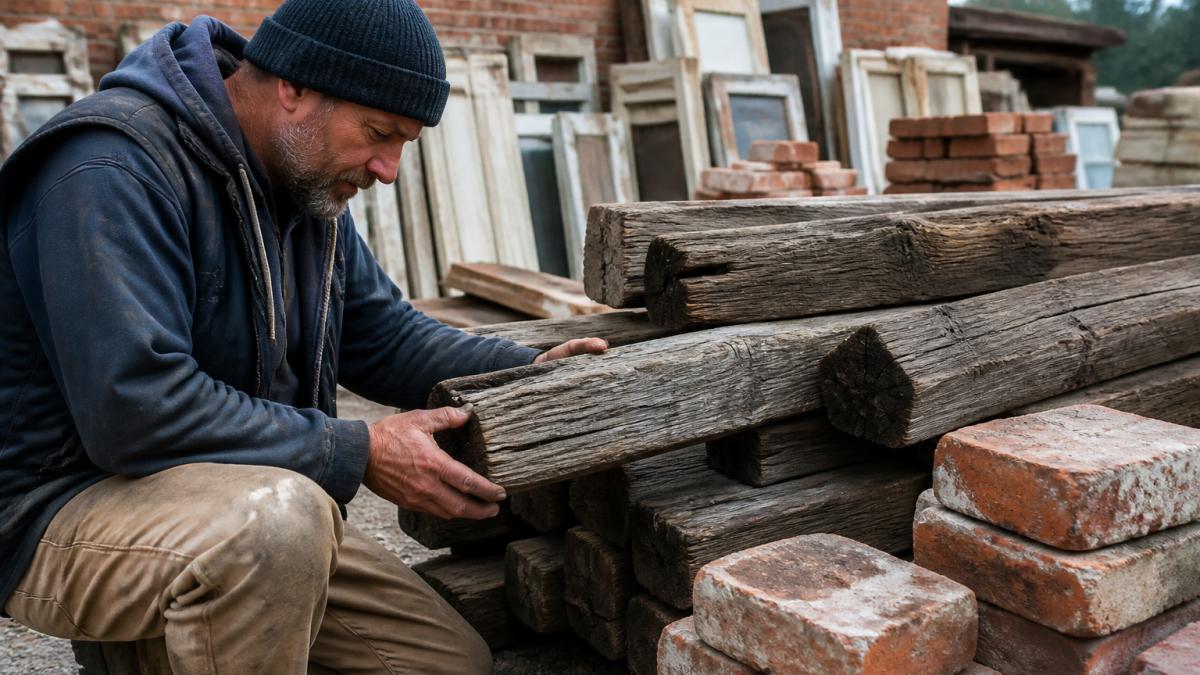
Most guides stop at "inspect before you buy". The part they leave out is what to inspect for, how to handle the material once it arrives, and how to treat it before it goes into a heritage building. That is the part that decides whether a reclaimed purchase is a saving or a liability.
Inspection Protocol by Material
Reclaimed timber. Ask for close-up photographs of the actual piece, not a representative sample.
Reclaimed brick. Confirm the colour and size match your existing course, because brick matching by eye from a photo almost always disappoints on site. Ask about the firing, under-fired brick is soft and will not weather like the original, while over-fired brick can be brittle.
Reclaimed ironwork and hardware. Ask whether the piece has been repaired and how, welded repairs on cast iron are a different proposition from brazed or pinned repairs, and they affect how the piece can be refinished.
Handling and Storage After Delivery
Reclaimed material is fragile in ways new stock is not. Plan for it before it arrives.
- Timber should be stacked with spacers to allow air movement, kept off the ground, and covered from direct rain but not sealed, trapped moisture causes mould and rot. Allow it to acclimatise to site conditions before machining.
- Brick should be stored on pallets, not loose on the ground, and kept dry. Wet reclaimed brick can leach salts into adjacent new work.
- Ironwork and hardware should be kept dry and separated to avoid scratching the patina. Do not wrap in plastic, which traps condensation.
Treatment Before Installation
Reclaimed timber that will sit inside a heritage building should be assessed for borer and treated if necessary before it is worked. Reclaimed brick should be cleaned gently, aggressive acid washing removes the very patina that makes it match. Ironwork should be assessed for active rust and stabilised before refinishing. In every case, treat first, install second; retrofitting treatment into a finished heritage interior is far harder.
The Repeatability Question
Reclaimed stock is finite. If your project needs more of the same brick or timber in six months, confirm now whether the supplier holds the balance of the batch or can source a matching lot. A single pallet that matches perfectly is no use if the second pallet does not.
Matching Period Home Restoration Materials to Your Property
Period home restoration materials only work when they match the era, not just the look. A Federation home and a Colonial cottage share almost nothing in their fixture vocabulary, and getting this wrong is the most common expensive mistake we see.
Use this as a starting point, then confirm against your property's actual documentation:
| Era | Typical Fixtures | Common Trap |
|---|---|---|
| Colonial | Simple cast iron, restrained detailing | Over-ornamenting a plain facade |
| Victorian | Ornate ceiling roses, elaborate cornice | Mixing late-Victorian with early styles |
| Federation | Timber joinery, leadlight, specific tile patterns | Assuming all Federation homes match |
The Heritage Council of Victoria publishes style guides that help narrow the field. When in doubt, send photographs of your existing features to your supplier and ask them to confirm the match before you order.
Heritage Architectural Hardware: What to Ask Before You Order
Heritage architectural hardware is where projects quietly go wrong. Handles, hinges, vents and finials all need to match in finish, scale and fixing centres, and a piece that looks right online can be 15mm off the mark in person.
Ask these four questions before committing:
- Is this an original, a period-accurate reproduction, or a modern copy?
- What are the exact fixing centres and dimensions?
- What is the finish, and will it patina consistently with my existing pieces?
- Can you supply the same specification again in six months?
That last question matters more than most buyers realise. Restoration is rarely one order. It is a series of them, spread across months, and consistency is what separates a finished job from a patchwork.
Professional Sourcing vs DIY: Which Route Fits Your Project
Professional sourcing suits listed properties, multi-order projects and anything requiring documentation. DIY sourcing works for single cosmetic items where the risk of a mismatch is low.
The trade-off is straightforward. A heritage builder or specialist supplier brings trade networks, verification skills and the ability to reject bad stock before it reaches your site. Doing it yourself saves on margin but costs you time, and mistakes are expensive to reverse.
For a single ceiling rose or a set of hooks, DIY is fine. The Australian Building Codes Board sets out the compliance framework that applies to building work, and it is worth understanding before you commit to a route.
If you are unsure which route fits, professional guidance is the safer choice.
Send Your Project Details to Restoration Station
The hardest part of sourcing is not finding stock. It is finding stock that matches, arrives intact, and can be repeated.
Restoration Station supplies period lighting, cast iron fireplaces and architectural details for heritage-listed, Colonial and Federation-style homes, backed by expert advice on restoration, renovation and remodelling projects. Send us your measurements, photographs and era details, and our team will help you confirm what is period-appropriate before you order. We ship across Australia and internationally.
Get started with Restoration Station and match your heritage building materials to your property with confidence.
Frequently Asked Questions
How do I find reliable suppliers for heritage building materials?
Start with suppliers who can tell you where a material came from, not just what it looks like. Ask for the provenance of reclaimed timber or brick, the era and style a fixture suits, and how they handle damaged deliveries. A knowledgeable supplier should also help you match items to your property rather than leaving you to guess. Check that they stock or can source period-accurate pieces, and confirm their return policy before you commit to a large order.
How can I check whether reclaimed building materials are suitable for a heritage property?
Inspect for structural integrity first: rot, insect damage, salt attack in masonry, and whether timber has been over-nailed or spliced. Confirm the material's dimensions and moisture content suit your application, and check that any previous coatings can be removed without damaging the surface. For brick, match colour, texture and mortar compatibility rather than size alone. Where a heritage overlay applies, confirm the change is permitted before you buy, because unsuitable or non-matching material can be refused at assessment.
What should I ask a supplier before buying heritage architectural hardware?
Ask whether an item is original, a period-accurate reproduction, or a modern lookalike, and get that in writing. Confirm the finish, dimensions and fixing centres so it fits existing door and window preparations. Ask about lead times for hard-to-find pieces, how items are packed for transit, and what happens if something arrives damaged or does not fit. For multi-stage projects, ask whether they can hold consistent stock and quality across repeat orders.
Can modern materials be used in heritage restoration?
Yes, where they are compatible and reversible. Modern materials often work well for hidden structural repairs, weatherproofing and services, provided they do not trap moisture or alter the appearance of significant fabric. The risk is using a hard modern mortar or sealant against soft historic masonry, which can cause salt and moisture damage over time. Match performance to the original material, keep interventions reversible, and confirm any visible change against heritage requirements before proceeding.
If your restoration project has stalled on a fixture nobody seems able to match, that is exactly the conversation we are built for. Send your project details through our quick enquiry form and our team will review the era, dimensions and finish you need. With 35 years of experience, an extensive range of traditional restoration products, and shipping available across Australia and overseas, Restoration Station can help you specify the right piece the first time.