Last Updated: October 31, 2026
Quick Summary
Sourcing authentic heritage fixtures delivers verifiable provenance, durability and long-term value that reproductions cannot match. Original brass, cast iron and hand-forged steel can often be repaired and restored, so you maintain an asset rather than replace a consumable. They also anchor a home's cultural identity and keep materials in circulation.
- Check maker's marks, material composition, construction method and age-consistent wear patterns before buying.
- Salvaged hardware suits one-off feature doors, while antique reproduction keeps whole-home fit-outs coherent.
- Measure door thickness, backset, spindle size and mortise dimensions, since heritage doors are often non-standard.
- Have a licensed electrician or plumber assess original lighting and plumbing fixtures before installation.
- Pick one approach per room, because mixing salvaged and reproduction in the same sightline rarely works.
Table of Contents
- Why Heritage Fixtures Change More Than a Room's Look
- Identifying Authentic Architectural Fixtures Before You Buy
- Antique Reproduction vs Salvaged Hardware: Which Suits Your Project?
- Choosing Period-Correct Door Hardware That Actually Fits
- Heritage Home Restoration: Matching Fixtures to Your Home's Era
- The Practical Benefits: Durability, Repairability and Long-Term Value
- Enquire About Fixtures for Your Restoration Project
- Frequently Asked Questions
Why Heritage Fixtures Change More Than a Room's Look
Walk into a Federation-era hallway with its original brass door knobs intact and you feel something a reproduction catalogue can't replicate. That feeling has a name: provenance. At Restoration Station, we help owners of heritage-listed and period homes understand why the benefits of sourcing authentic heritage fixtures run far deeper than aesthetics. Authentic heritage fixtures are original or period-correct architectural fittings, such as door hardware, lighting and cast iron features, that carry verifiable historical provenance and match a building's era. They anchor a home's cultural identity, hold their value, and behave in ways modern replicas simply don't. Below, we break down how to identify them, weigh salvaged against reproduction, and decide what's genuinely worth the effort.
The stakes are higher than most renovators realise. Heritage overlays and listing controls often shape what you can change and what you must preserve, so the guidance on heritage places and approvals is worth reading before you buy a single hinge. Get the fixtures right and the whole property reads as coherent. Get them wrong and even a sympathetic renovation feels off.
Identifying Authentic Architectural Fixtures Before You Buy
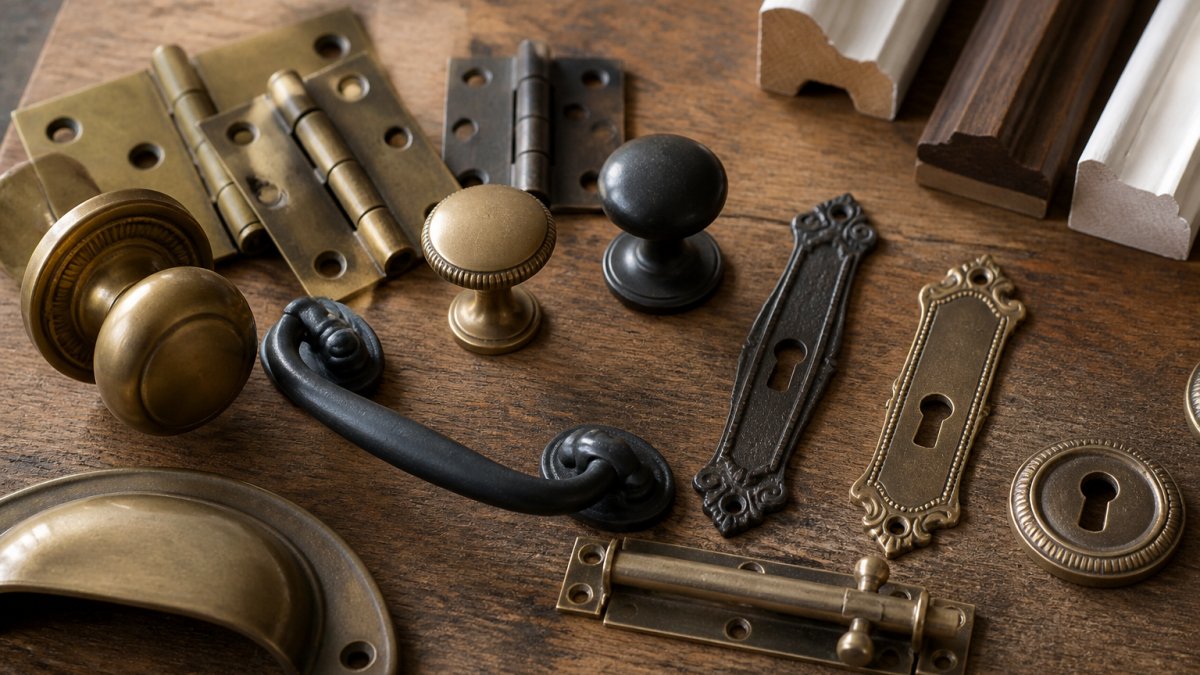
Identifying authentic architectural fixtures means checking four things: maker's marks, material composition, construction method, and wear patterns consistent with age. A genuine Victorian brass handle will show casting seams, hand-finished edges, and patina that sits in the recesses rather than on the surface. Reproduction pieces usually give themselves away with uniform finishes and machine-perfect symmetry.
Here's what most guides miss: patina can't be faked convincingly. Real age produces uneven oxidation, tiny tool marks, and wear exactly where hands have gripped for a century. Look for stamped or cast maker's marks on the reverse of backplates, and check screw threads, since slot-head screws and hand-cut threads point to genuine period manufacture.
A common mistake is buying on the photo alone. Ask for close-ups of the back, the fixings, and any damage. For a deeper walkthrough of the checks we use, see our guide on how to identify period correct hardware.
Antique Reproduction vs Salvaged Hardware: Which Suits Your Project?
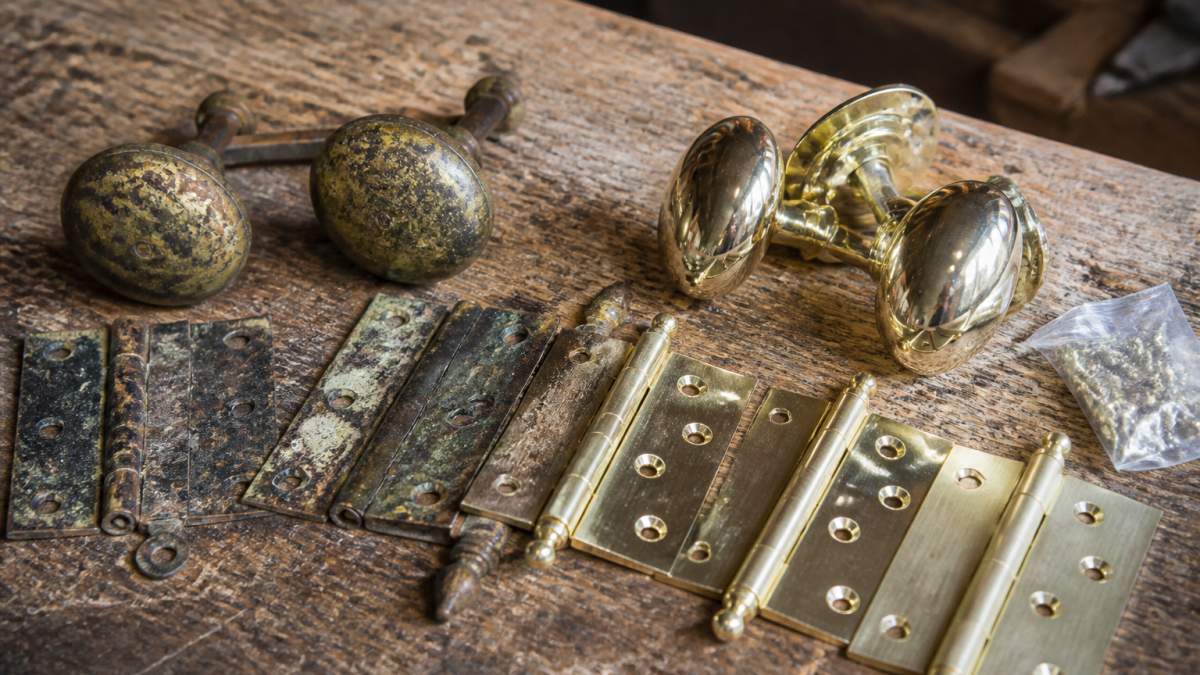
Neither option wins outright. Salvaged hardware delivers genuine provenance and unmatched character, but stock is limited and condition varies. Antique reproduction offers consistency, matching sets, and reliable dimensions, which matters when you're fitting out a whole house. If you need one showpiece for a front door, salvage usually wins. If you're replacing twenty matching handles, reproduction keeps the scheme coherent.
| Factor | Salvaged Hardware | Antique Reproduction |
|---|---|---|
| Authenticity | Genuine period provenance | Period-styled, modern-made |
| Consistency across a project | Variable | High, matching sets available |
| Availability | Limited, one-off finds | Repeatable and reorderable |
| Condition and repair needs | Often needs restoration | Ready to install |
| Best for | Feature doors, statement pieces | Whole-home fit-outs |
Watch out: mixing salvaged and reproduction in the same sightline rarely works, because the finish and weight differences are obvious up close. Pick one approach per room.
Choosing Period-Correct Door Hardware That Actually Fits
Period-correct door hardware is hardware whose style, material and mechanism match the era of the home, not simply hardware that looks old. A 1920s Federation home typically suits brass lever handles and simple backplates, while a Colonial-era property leans toward darker iron and thumb-latches. Getting the era right is half the job. The other half is fit.
Measure everything before ordering: door thickness, backset, spindle size and existing mortise dimensions. Heritage doors are frequently non-standard, so a handle that doesn't align with the existing latch will not work. If you're unsure which style belongs in your home, our period guide to matching door handles walks through each era.
Heritage Home Restoration: Matching Fixtures to Your Home's Era
Heritage home restoration works best when every fitting tells the same story. A cast iron fireplace, period lighting and door furniture from a single era create a coherence that buyers and heritage assessors both notice. Start by dating the property through title records, architectural style and original features, then build a fixture schedule room by room. Where a home has been altered over decades, you will often find layers, a Federation front room with 1970s light fittings, for example. Decide early whether you are restoring to the original era or preserving the home's full evolution. Both are defensible; drifting between them is what creates the muddle.
Matching to an era is only half the job. The other half is sourcing and installing fixtures that are authentic, safe and appropriate. Sourcing channels differ in what they offer. Salvage yards and demolition auctions suit one-off feature pieces, but stock is unpredictable and condition varies. Specialist dealers often curate stock and can document provenance, which matters for higher-value pieces. Online marketplaces widen the search but require careful verification, because photographs can flatter condition and provenance claims are hard to test remotely.
Verification is where most buyers come unstuck. Ask for close-ups of maker's marks, the reverse of backplates, screw threads and any damage. Check whether the finish is consistent with age, real patina sits in recesses and shows uneven oxidation, while reproduction finishes are usually uniform. Ask about restoration history: has the item been re-plated, re-wired or re-finished, and by whom? A fixture that has been sensitively restored can be a better buy than an untouched one that is failing, provided the restoration is disclosed. For a deeper walkthrough of the checks we use, see our guide on how to identify period correct hardware.
Installation and compliance are part of era matching, not an afterthought. Heritage doors are frequently non-standard, so measure door thickness, backset, spindle size and existing mortise dimensions before ordering. Lighting and plumbing fixtures need assessment by a licensed electrician or plumber for wiring, earthing, pressure ratings and compatibility with current standards. Accessibility is worth considering too: original door furniture can be difficult to operate for people with limited grip, and in some cases a period-correct design can be adapted without losing character. When a fixture needs professional assessment or adaptation, factor that into the schedule early rather than at installation.
Where a home has been altered over decades, the fixture schedule becomes a conservation tool as much as a shopping list. Record what is original, what is period-correct but later, and what is modern. That record supports approvals, helps future owners, and keeps the project coherent. For whole-project guidance, our team's expert advice for heritage home restoration covers how to sequence the work.
The Practical Benefits: Durability, Repairability and Long-Term Value
Authentic fixtures earn their keep over decades, but the benefits are specific rather than vague. Solid brass, cast iron and hand-forged steel can often be repaired and restored, while many modern fittings cannot be repaired economically. That repairability is the quiet financial argument for authenticity: you maintain an asset rather than replacing a consumable. A cast iron door knocker or a solid brass lever handle can often be brought back to working order; many zinc-alloy reproductions cannot.
The durability story is really a materials story. Brass and bronze develop a stable patina that protects the surface, cast iron carries mass and rigidity that thin modern castings lack, and hand-forged steel can be re-tempered. When you assess a salvaged fixture, check the weight, the thickness of the metal at stress points, and whether the mechanism is serviceable. A heavy, serviceable fixture is usually the better long-term buy than a lighter one with a sealed mechanism.
There is an environmental angle too. Reusing salvaged hardware keeps materials in circulation instead of sending them to landfill. The Burra Charter principles on conserving heritage significance set out why retaining original fabric matters, and that logic applies to fixtures as much as walls. The trade-off is honest: restoration can consume time and specialist labour, and some fixtures are beyond saving. The practical test is whether the item can be returned to safe, reliable service without compromising its historic character.
Safety and compliance belong in this section because they affect long-term value. Original lighting and plumbing fixtures were built to older standards, so before installation have an electrician or plumber assess wiring, earthing, insulation, pressure ratings and compatibility with current requirements. In many cases a fixture can be retained and adapted, re-wired, re-sealed or fitted with modern components, rather than replaced. That assessment is part of the true cost of ownership, alongside restoration, installation and ongoing maintenance, and it is why a cheap salvaged fixture can end up costing more than a well-chosen period-correct one.
Keeping authentic fixtures working is straightforward once you know how. Our guide on maintaining period architectural fixtures covers cleaning, protection and when to call in a specialist.
Enquire About Fixtures for Your Restoration Project
Sourcing consistent, period-accurate fixtures across a whole project can be challenging. Stock varies, eras blur, and one wrong order can stall a build. Restoration Station offers a comprehensive selection of period lighting, cast iron fireplaces and architectural details in one place, backed by expert advice for restoration and renovation projects and shipping across Australia and internationally. If you're ready to source, read about sourcing consistent heritage fixtures for projects, then send us a quick enquiry with your era, room schedule and quantities.
Frequently Asked Questions
What makes a fixture authentic to a heritage home?
Authenticity rests on three things: the era the design belongs to, the materials used, and the evidence of where the item came from. An original piece will show period construction methods, such as hand-cut threads, sand-cast marks or a maker's stamp, and wear that matches its age. Provenance matters as much as appearance, so ask for the building or estate a salvaged item came from. A reproduction can be period-correct in style without being authentic, and both have a place in heritage fixtures work.
How can I tell whether heritage hardware is original or a reproduction?
Look at the details a machine repeats too neatly. Original cast iron and brass usually carry small irregularities, uneven patina and wear in the places hands actually touch, such as a handle's grip. Check screw holes for elongation, look for hand-finished edges, and ask for photographs of the back or mounting face. Reproductions often have uniform thickness and sharp, identical edges. A supplier with decades of experience should be able to tell you plainly which category an item falls into before you order.
Are salvaged fixtures suitable for a heritage renovation?
Often yes, provided you check condition and fit first. Salvaged door hardware, lighting and cast iron pieces carry genuine historical character and patina that new pieces cannot replicate. Before buying, confirm dimensions against your existing mortises and door thickness, ask about corrosion or missing components, and check whether the item can be repaired rather than replaced. For heritage home restoration, salvaged pieces are usually the closest match to what was originally specified.
Can authentic heritage fixtures work with modern home upgrades?
They can, and mixing eras carefully often produces a better result than a fully modern fit-out in an older house. The main considerations are practical: electrical fittings need to meet current wiring rules, and door hardware must operate reliably within existing openings. Ask your electrician or builder to confirm compliance before installation. Where an original piece cannot be adapted safely, a period-correct reproduction lets you keep the look while meeting today's standards.
Matching authentic heritage fixtures to a period home takes patience, the right checks, and a supplier who understands eras rather than just aesthetics. If you'd rather not guess, Restoration Station offers 35 years of experience, a broad range of traditional restoration hardware, and friendly experts who help you specify the right pieces for heritage-listed, Colonial and Federation-style homes. Get started with Restoration Station and give your restoration the coherence it deserves.